
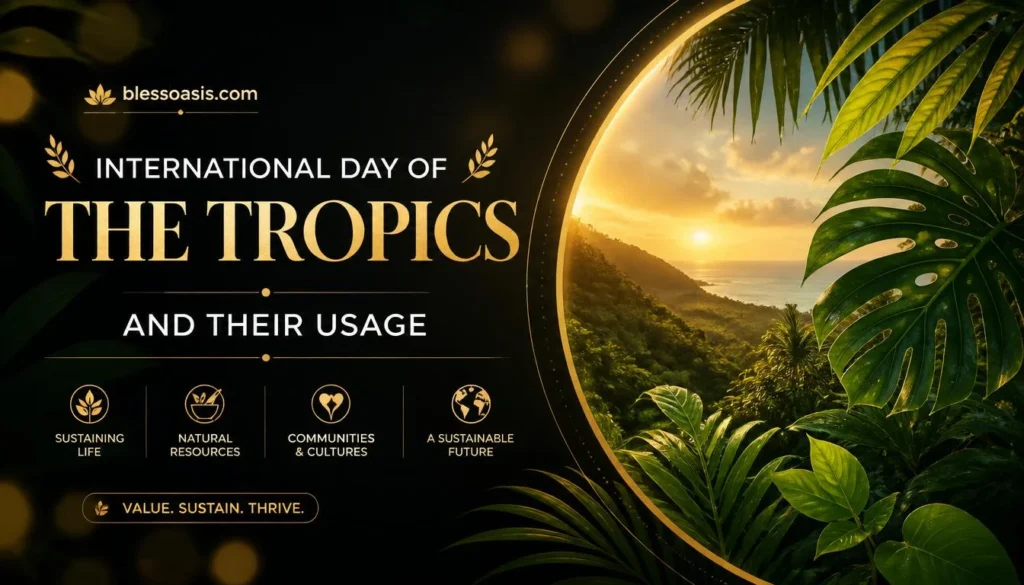
Every year on June 29, people around the world observe International Day of the Tropics, a global awareness day that shines a spotlight on one of Earth’s most extraordinary regions. Stretching between the Tropic of Cancer and the Tropic of Capricorn, the tropics are home to breathtaking rainforests, vibrant coral reefs, countless wildlife species, and billions of people whose cultures and livelihoods are deeply connected to these environments.
Despite their beauty and abundance, tropical regions face some of the world’s greatest environmental, economic, and social challenges. Deforestation, rising temperatures, habitat loss, extreme weather events, and unsustainable development threaten ecosystems that support life far beyond the tropical zone.
International Day of the Tropics encourages governments, educators, scientists, conservation organizations, and individuals to recognize both the opportunities and responsibilities associated with these remarkable regions. It reminds us that protecting the tropics isn’t just a local concern—it’s a global priority.
In this comprehensive guide, you’ll discover the history of the observance, why the tropics matter, the challenges they face, and meaningful ways to participate in protecting one of Earth’s most valuable natural treasures.
What Is International Day of the Tropics?
International Day of the Tropics is an annual international observance held on June 29 to raise awareness about the immense ecological, cultural, scientific, and economic importance of tropical regions.
The day also highlights the unique challenges facing tropical countries, including:
- Climate change
- Biodiversity loss
- Poverty
- Deforestation
- Urbanization
- Water insecurity
- Food security
- Sustainable development
Rather than being a celebration alone, it serves as a global call to action. It encourages collaboration between governments, researchers, local communities, businesses, and environmental organizations to create sustainable solutions for the future.
Quick Definition
International Day of the Tropics is a United Nations-recognized observance dedicated to promoting awareness of tropical regions, their rich biodiversity, cultural diversity, economic importance, and the need for sustainable development.
When Is International Day of the Tropics?
International Day of the Tropics is observed every year on June 29.
The date commemorates the release of the landmark State of the Tropics Report, first published on June 29, 2014. The report provided one of the most comprehensive analyses ever conducted on tropical regions, highlighting their opportunities, growth, and pressing environmental challenges.
Today, June 29 serves as a reminder that the future of the tropics is closely linked to the future of the entire planet.
Why Was International Day of the Tropics Created?
The observance was established to increase worldwide understanding of the tropics’ extraordinary significance.
While tropical regions cover only about 40% of Earth’s surface, they support:
- Most of the world’s rainforest ecosystems
- A significant share of global biodiversity
- Hundreds of millions of farmers
- Thousands of Indigenous cultures
- Major freshwater systems
- Important fisheries
- Some of the fastest-growing populations on Earth
At the same time, these regions experience disproportionate environmental pressures.
International Day of the Tropics helps draw attention to these realities while encouraging international cooperation to protect natural resources and improve the well-being of people living across tropical nations.
The History of International Day of the Tropics
The origins of the observance are closely tied to growing scientific concern about the future of tropical ecosystems.
The State of the Tropics Report
In 2014, researchers released the first State of the Tropics Report, bringing together experts from numerous countries.
The report examined:
- Population growth
- Health
- Education
- Biodiversity
- Economic development
- Climate
- Environmental sustainability
Its findings demonstrated that tropical regions were experiencing rapid transformation. While many countries were making progress in education, healthcare, and economic growth, environmental pressures were increasing at an alarming pace.
United Nations Recognition
Recognizing the report’s importance, the United Nations General Assembly proclaimed June 29 as International Day of the Tropics.
The observance encourages:
- Better research
- International partnerships
- Sustainable policies
- Public awareness
- Environmental responsibility
Since then, educational institutions, conservation groups, governments, and communities worldwide have participated in activities promoting the protection and sustainable development of tropical regions.
What Are the Tropics?
The tropics are the part of Earth located between two imaginary lines:
- Tropic of Cancer (23.5° north latitude)
- Tropic of Capricorn (23.5° south latitude)
This area surrounds the Equator and includes parts of:
- South America
- Central America
- Africa
- Asia
- Australia
- Oceania
- Numerous island nations
The region experiences relatively warm temperatures throughout the year because it receives direct sunlight more consistently than other parts of the world.
Characteristics of Tropical Regions
Although many people associate the tropics only with rainforests and beaches, the region is incredibly diverse.
Warm Climate
Most tropical areas remain warm year-round, with limited seasonal temperature changes.
Rich Biodiversity
Many tropical ecosystems support thousands of plant and animal species found nowhere else on Earth.
Heavy Rainfall
Numerous tropical regions experience abundant rainfall, particularly in rainforest zones, creating ideal conditions for lush vegetation.
Diverse Ecosystems
The tropics include much more than rainforests, such as:
- Coral reefs
- Mangrove forests
- Tropical savannas
- Wetlands
- Mountain forests
- Coastal ecosystems
- Rivers and estuaries
Cultural Diversity
Thousands of languages, traditions, and Indigenous cultures thrive across tropical countries, making the region one of the most culturally rich places on Earth.
Why Tropical Regions Matter
The importance of tropical regions extends far beyond their geographical boundaries.
Their health directly influences global climate, biodiversity, food systems, freshwater supplies, and economic stability.
Let’s explore why these regions are so vital.
They Are the World’s Biodiversity Hotspots
Tropical ecosystems contain an astonishing variety of life.
Scientists estimate that tropical forests alone are home to more than half of the world’s known plant and animal species.
These habitats support:
- Mammals
- Birds
- Amphibians
- Reptiles
- Insects
- Medicinal plants
- Pollinators
Many species found in tropical environments exist nowhere else.
Protecting these ecosystems helps preserve Earth’s biological heritage for future generations.
They Help Regulate Earth’s Climate
Healthy tropical forests absorb enormous amounts of carbon dioxide.
By storing carbon in trees and soil, they help slow global warming.
Forests also influence rainfall patterns across continents, regulate temperatures, and stabilize weather systems.
When forests disappear, stored carbon is released back into the atmosphere, accelerating climate change.
They Produce Oxygen and Clean Air
While all green plants contribute to oxygen production, tropical forests play a significant role in maintaining atmospheric balance.
Their dense vegetation also filters pollutants and supports cleaner air.
They Protect Freshwater Resources
Many major rivers originate within tropical regions.
Healthy forests protect watersheds by:
- Reducing erosion
- Improving water quality
- Supporting groundwater recharge
- Preventing floods
Communities both inside and outside tropical areas depend on these freshwater systems.
Economic Importance of the Tropics
The tropics are not only ecological treasures but also powerful engines of the global economy.
Millions of livelihoods depend directly on tropical resources.
Agriculture
Many of the world’s favorite foods originate in tropical climates, including:
- Coffee
- Cocoa
- Bananas
- Mangoes
- Pineapples
- Coconut
- Sugarcane
- Vanilla
- Spices
These crops support farmers, exporters, food manufacturers, and international trade.
Fisheries
Tropical oceans and coastal waters provide seafood that feeds millions of people while supporting local economies.
Healthy marine ecosystems remain essential for sustainable fisheries.
Tourism
Beautiful beaches, coral reefs, rainforests, waterfalls, wildlife reserves, and cultural heritage sites attract travelers from around the world.
Responsible ecotourism can generate income while encouraging conservation.
Renewable Resources
Many tropical forests provide sustainable resources, including:
- Natural fibers
- Bamboo
- Medicinal plants
- Essential oils
- Rubber
- Fruits
- Nuts
When managed responsibly, these resources contribute to long-term economic resilience rather than environmental degradation.
The Incredible Biodiversity of the Tropics
Few places on Earth rival the richness of life found within tropical ecosystems.
From towering rainforest canopies to colorful coral reefs, these environments support an astonishing web of interconnected species that has evolved over millions of years.
This extraordinary biodiversity is one of the primary reasons International Day of the Tropics is so significant.
Biodiversity is far more than a count of plants and animals. It represents the complex relationships between living organisms, their habitats, and the natural processes that keep ecosystems healthy. Every tree, insect, bird, fungus, and microorganism plays a role in maintaining ecological balance.
Tropical Rainforests: Nature’s Living Libraries
Tropical rainforests are among the most biologically diverse ecosystems on Earth.
A single hectare of rainforest can contain hundreds of tree species, each providing food and shelter for countless insects, mammals, reptiles, amphibians, and birds.
These forests are home to:
- Colorful parrots and toucans
- Primates such as monkeys and lemurs
- Jaguars, tigers, and other large predators
- Thousands of butterfly species
- Rare orchids and flowering plants
- Medicinal herbs used in scientific research
- Millions of microorganisms that scientists are still discovering
Researchers continue to identify new species every year, highlighting just how much remains unknown about tropical ecosystems.
The remarkable diversity of life in these forests underscores the importance of preserving them—not only for wildlife but also for future scientific discoveries, medicine, and sustainable development.
Coral Reefs: The Rainforests of the Sea
When discussing tropical biodiversity, coral reefs deserve special attention. Often called the “rainforests of the ocean,” these underwater ecosystems support an incredible variety of marine life despite covering only a tiny fraction of the ocean floor.
Coral reefs provide shelter, breeding grounds, and feeding areas for thousands of species, including:
- Reef fish
- Sea turtles
- Sharks
- Rays
- Crustaceans
- Mollusks
- Sea stars
- Sponges
Healthy reefs also protect coastlines from erosion by reducing the force of waves during storms.
Millions of people rely on coral reefs for food, tourism income, and coastal protection. Unfortunately, warming oceans, pollution, overfishing, and coral bleaching continue to threaten these fragile ecosystems.
Protecting coral reefs is one of the most urgent conservation priorities in tropical regions.
Mangrove Forests: Nature’s Coastal Guardians
Mangrove forests grow where land meets the sea in many tropical and subtropical regions.
Although they may not receive as much attention as rainforests, mangroves perform remarkable ecological functions.
They:
- Protect coastlines from storm surges
- Reduce coastal erosion
- Store significant amounts of carbon
- Filter pollutants from water
- Provide nurseries for fish and shellfish
- Support migratory birds
Communities living near mangroves often depend on them for fishing, sustainable forestry products, and protection against tropical storms.
Restoring mangrove forests has become a key strategy in climate adaptation and biodiversity conservation.
The People of the Tropics
The tropics are not just home to extraordinary ecosystems—they are home to billions of people representing an incredible diversity of cultures, languages, and traditions.
Many of the world’s fastest-growing cities are located within tropical regions, while remote villages continue to preserve centuries-old cultural practices.
Indigenous Knowledge Matters
Indigenous Peoples have managed tropical forests, rivers, and coastal ecosystems for generations.
Their knowledge includes:
- Sustainable farming methods
- Traditional medicine
- Wildlife conservation practices
- Water management
- Fire prevention
- Forest restoration
Increasingly, scientists and policymakers recognize that successful conservation often depends on partnering with Indigenous communities rather than excluding them.
Their lived experience provides valuable insights into maintaining healthy ecosystems while supporting local livelihoods.
Major Environmental Challenges Facing the Tropics
Although tropical regions possess immense natural wealth, they also face serious environmental pressures.
Understanding these challenges is one of the key goals of International Day of the Tropics.
Deforestation
Large areas of tropical forests continue to disappear due to:
- Agricultural expansion
- Illegal logging
- Mining
- Infrastructure development
- Urban growth
Deforestation destroys wildlife habitats, reduces biodiversity, disrupts water cycles, and releases stored carbon into the atmosphere.
Protecting existing forests is often more effective than trying to restore them after they have been cleared.
Climate Change
Climate change affects nearly every aspect of tropical life.
Many tropical regions are already experiencing:
- Higher temperatures
- Longer droughts
- More intense rainfall
- Rising sea levels
- Stronger tropical storms
- Increased wildfire risk
- Coral bleaching
These changes threaten agriculture, freshwater supplies, biodiversity, public health, and economic stability.
Communities with limited resources are often the most vulnerable to these impacts.
Biodiversity Loss
Habitat destruction, pollution, invasive species, and illegal wildlife trade continue to reduce populations of many tropical plants and animals.
Species that disappear cannot easily be replaced.
The loss of even a single species may affect pollination, seed dispersal, food chains, and ecosystem resilience.
Protecting biodiversity means protecting the natural systems that support human life.
Plastic Pollution
Plastic waste has become a growing problem across tropical coastlines and oceans.
Marine animals may mistake plastic for food, leading to injury or death.
Single-use plastics also damage coral reefs, clog waterways, and reduce tourism value.
Many tropical countries are introducing policies to reduce plastic pollution through recycling initiatives and restrictions on disposable plastics.
Unsustainable Resource Use
Natural resources provide economic opportunities, but overexploitation can cause long-term damage.
Examples include:
- Overfishing
- Illegal logging
- Wildlife trafficking
- Unsustainable mining
- Poor land management
Balancing economic growth with environmental protection remains one of the biggest challenges facing tropical nations.
Climate Change and the Future of the Tropics
Climate change represents one of the defining issues for tropical regions during the twenty-first century.
Scientists continue to study how rising global temperatures may affect ecosystems, agriculture, weather patterns, and biodiversity.
Some expected impacts include:
- More frequent coral bleaching events
- Shifts in rainfall patterns
- Reduced crop yields in some areas
- Expansion of certain pests and diseases
- Increased flooding
- Greater pressure on freshwater resources
- Habitat loss for wildlife
At the same time, many tropical countries are leading innovative climate adaptation projects focused on renewable energy, forest restoration, sustainable farming, and community resilience.
International cooperation will be essential to support these efforts.
Why Conservation Is Essential
Protecting tropical ecosystems benefits everyone—not just the people who live there.
Conservation helps:
- Preserve biodiversity
- Maintain stable climates
- Secure freshwater supplies
- Support sustainable agriculture
- Protect cultural heritage
- Strengthen local economies
- Improve disaster resilience
- Safeguard future scientific discoveries
Conservation is most effective when governments, researchers, businesses, local communities, and individuals work together toward shared goals.
How International Day of the Tropics Is Celebrated
People celebrate the day in many different ways depending on their interests and communities.
Activities often focus on education, environmental stewardship, and cultural appreciation.
Educational Programs
Schools and universities organize:
- Classroom discussions
- Science projects
- Geography lessons
- Environmental workshops
- Wildlife presentations
- Documentary screenings
Students learn about tropical ecosystems and explore ways to protect them.
Community Tree Planting
Tree-planting events remain one of the most popular observances.
Native trees help:
- Restore habitats
- Reduce soil erosion
- Improve biodiversity
- Capture carbon dioxide
- Beautify communities
Local conservation organizations often coordinate these activities.
Beach and River Cleanups
Removing litter from waterways helps protect marine life while raising awareness about plastic pollution.
Volunteers may collect:
- Plastic bottles
- Fishing gear
- Food packaging
- Glass
- Aluminum cans
- Cigarette waste
These events also educate participants about responsible waste management.
Nature Walks and Wildlife Tours
Parks, botanical gardens, wildlife reserves, and nature centers frequently organize guided tours.
Visitors gain firsthand appreciation for tropical plants, birds, insects, and ecosystems while learning about ongoing conservation work.
Public Lectures and Conferences
Scientists, environmental organizations, and universities often host discussions covering:
- Climate science
- Conservation
- Sustainable development
- Biodiversity
- Ecotourism
- Indigenous knowledge
These events encourage dialogue between experts and the public.
How You Can Participate
You don’t need to live in a tropical country to make a positive impact.
Here are meaningful ways to observe International Day of the Tropics:
Learn About Tropical Ecosystems
Read books, watch documentaries, or attend educational events to deepen your understanding of tropical biodiversity and conservation.
Knowledge is the first step toward meaningful action.
Support Sustainable Products
Choose products certified as sustainably sourced whenever possible.
Responsible purchasing decisions can encourage better environmental practices in industries connected to tropical agriculture and forestry.
Reduce Plastic Waste
Simple changes make a difference:
- Carry reusable bags
- Use refillable water bottles
- Avoid unnecessary single-use plastics
- Recycle properly
- Participate in community cleanups
Support Conservation Organizations
Many nonprofit organizations work to protect tropical forests, coral reefs, endangered wildlife, and local communities.
Supporting reputable organizations through donations or volunteering can contribute to long-term conservation efforts.
Share Educational Content
Use social media to spread awareness by sharing:
- Wildlife facts
- Conservation success stories
- Educational infographics
- Environmental tips
- Photos of tropical ecosystems
Positive awareness campaigns inspire others to get involved.
International Day of the Tropics Activities for Schools
Teachers can use this observance to make environmental education engaging and interactive.
Ideas include:
- Create rainforest dioramas
- Research tropical animals
- Organize poster competitions
- Host environmental debates
- Plant native trees
- Conduct recycling drives
- Build classroom biodiversity displays
- Hold geography quizzes
- Invite conservation speakers
- Watch educational nature documentaries
These activities encourage curiosity while helping students understand global environmental challenges.
International Day of the Tropics Activities for Workplaces
Businesses can also participate by promoting sustainability.
Ideas include:
- Environmental awareness seminars
- Office recycling campaigns
- Paper reduction initiatives
- Fundraisers for conservation charities
- Green commuting challenges
- Employee volunteer days
- Sustainability workshops
- Educational newsletters
Corporate participation demonstrates environmental responsibility while engaging employees in meaningful causes.
Fascinating Facts About the Tropics
Here are some interesting facts that highlight why tropical regions deserve global attention.
| Fact | Why It Matters |
|---|---|
| The tropics receive the most direct sunlight on Earth. | Supports year-round warmth and diverse ecosystems. |
| Tropical rainforests contain an enormous share of the world’s terrestrial biodiversity. | They are critical habitats for countless species. |
| Many everyday foods, including coffee, cocoa, bananas, and vanilla, thrive in tropical climates. | The tropics play a major role in global agriculture. |
| Coral reefs support thousands of marine species while protecting coastlines. | Healthy reefs benefit both biodiversity and local communities. |
| Mangrove forests store large amounts of carbon in their soils and vegetation. | They help mitigate climate change and reduce coastal erosion. |
| Millions of people depend directly on tropical ecosystems for food, income, and clean water. | Conservation supports both nature and human well-being. |
| Scientists continue to discover new species in tropical forests each year. | There is still much to learn about these ecosystems. |
Common Myths About the Tropics
Myth: The tropics are only rainforests.
Fact: Tropical regions include deserts, grasslands, mountains, wetlands, mangroves, coral reefs, and many other ecosystems.
Myth: Tropical forests are endless.
Fact: Many forests have been significantly reduced by deforestation and land-use changes, making conservation increasingly important.
Myth: Biodiversity only benefits scientists.
Fact: Biodiversity supports agriculture, medicine, tourism, clean water, climate regulation, and healthy ecosystems that benefit everyone.
Myth: Individual actions don’t matter.
Fact: Everyday choices—such as reducing waste, supporting sustainable products, and learning about conservation—can collectively make a meaningful difference.
Expert Perspective
One of the most important lessons emerging from decades of environmental research is that protecting tropical ecosystems requires balancing conservation with human development.
Successful long-term solutions often combine:
- Science-based environmental management
- Community participation
- Indigenous knowledge
- Sustainable economic opportunities
- International cooperation
- Responsible policy decisions
Rather than viewing conservation and development as opposing goals, many experts now emphasize that healthy ecosystems are essential for long-term prosperity.
Frequently Asked Questions (FAQs)
1. What is International Day of the Tropics?
International Day of the Tropics is observed every year on June 29 to recognize the environmental, cultural, economic, and scientific importance of tropical regions while raising awareness about the challenges they face.
2. Why is International Day of the Tropics celebrated?
The observance promotes global awareness of tropical ecosystems, biodiversity, sustainable development, climate resilience, and the well-being of billions of people living in tropical countries.
3. Who established International Day of the Tropics?
The United Nations General Assembly officially proclaimed June 29 as International Day of the Tropics to highlight the significance of tropical regions and encourage international cooperation.
4. What are the tropics?
The tropics are the region of Earth located between the Tropic of Cancer and the Tropic of Capricorn, surrounding the Equator and receiving abundant sunlight throughout the year.
5. Why are tropical rainforests important?
Tropical rainforests support remarkable biodiversity, help regulate the global climate, store carbon, protect freshwater resources, and provide livelihoods for millions of people.
6. How does climate change affect tropical regions?
Climate change contributes to rising temperatures, stronger storms, coral bleaching, changing rainfall patterns, sea-level rise, and increased pressure on agriculture, wildlife, and water resources.
7. How can individuals celebrate International Day of the Tropics?
You can participate by:
- Learning about tropical ecosystems
- Planting native trees
- Reducing plastic waste
- Supporting conservation organizations
- Sharing educational resources
- Participating in local environmental events
- Choosing sustainably sourced products
8. Why is biodiversity important in the tropics?
Healthy biodiversity supports pollination, food production, medicine, clean water, climate regulation, and resilient ecosystems that benefit both people and wildlife.
9. Which countries are located in the tropics?
Many countries in South America, Africa, Asia, Oceania, Central America, and the Caribbean lie partially or entirely within the tropical zone.
10. Why should future generations care about the tropics?
The future of tropical ecosystems directly influences global food security, climate stability, freshwater availability, biodiversity conservation, and sustainable economic development.
11. What are the biggest threats facing tropical ecosystems?
Some of the most significant threats include:
- Deforestation
- Climate change
- Habitat fragmentation
- Illegal wildlife trade
- Pollution
- Unsustainable agriculture
- Overfishing
- Urban expansion
12. Can small actions really help protect the tropics?
Yes. While large-scale policies are essential, individual actions such as reducing waste, supporting sustainable businesses, conserving energy, and spreading awareness collectively contribute to meaningful environmental progress.
Quick Summary
If you’re looking for a concise overview, here’s what to remember about International Day of the Tropics:
- Date: June 29 every year
- Purpose: Raise awareness about tropical regions and promote sustainable development
- Recognized by: United Nations
- Focus Areas: Biodiversity, climate, conservation, sustainable livelihoods, education, and global cooperation
- Why It Matters: Tropical regions support an extraordinary share of Earth’s biodiversity, influence the global climate, and provide essential resources for billions of people.
Key Takeaways
International Day of the Tropics is much more than a date on the calendar. It is a reminder that the health of tropical regions affects every person on the planet.
Some of the most important lessons include:
- Tropical ecosystems are among the most biologically diverse places on Earth.
- Healthy forests, coral reefs, wetlands, and mangroves provide essential environmental services.
- Sustainable development must balance economic growth with environmental protection.
- Indigenous knowledge plays a valuable role in conservation.
- Climate change poses increasing risks to tropical communities and ecosystems.
- Education and public awareness encourage long-term environmental stewardship.
- Everyone can contribute through informed choices and responsible actions.
Final Thoughts
The tropics are home to extraordinary natural wonders, vibrant cultures, and ecosystems that sustain life on a global scale. From towering rainforests and colorful coral reefs to fertile farmland and thriving coastal communities, these regions are indispensable to Earth’s environmental and economic health.
International Day of the Tropics reminds us that protecting these landscapes is a shared responsibility. Governments, scientists, businesses, educators, local communities, and individuals all have a role to play in ensuring that tropical regions remain healthy and resilient.
Whether you choose to plant a tree, reduce plastic waste, support sustainable products, volunteer for conservation efforts, or simply learn more about the world’s tropical ecosystems, your actions contribute to a broader movement toward a healthier planet.
As environmental challenges continue to evolve, this observance serves as both a celebration of the tropics’ remarkable richness and a call to safeguard them for future generations. By valuing biodiversity, embracing sustainable practices, and working together across borders, we can help ensure that the tropical regions continue to thrive—and that their benefits endure for people and nature alike.
DISCOVER MORE ARTICLES
Good Morning Prayers for My Love to Brighten Every Day 2026
Before Surgery Wishes and Prayers for Every Loved One 2026
Happy Monday Blessings, Prayers & Inspiring Wishes 2026

Shahzad is the Founder of BlessOasis, a faith-inspired website sharing heartfelt blessings, prayers, wishes, Bible verses, and uplifting messages to bring hope, comfort, and encouragement to readers.